Nature Bubz
Nature Bubz- Baltic Amber Chip Necklace- Cherry
Nature Bubz- Baltic Amber Chip Necklace- Cherry
Couldn't load pickup availability
Share
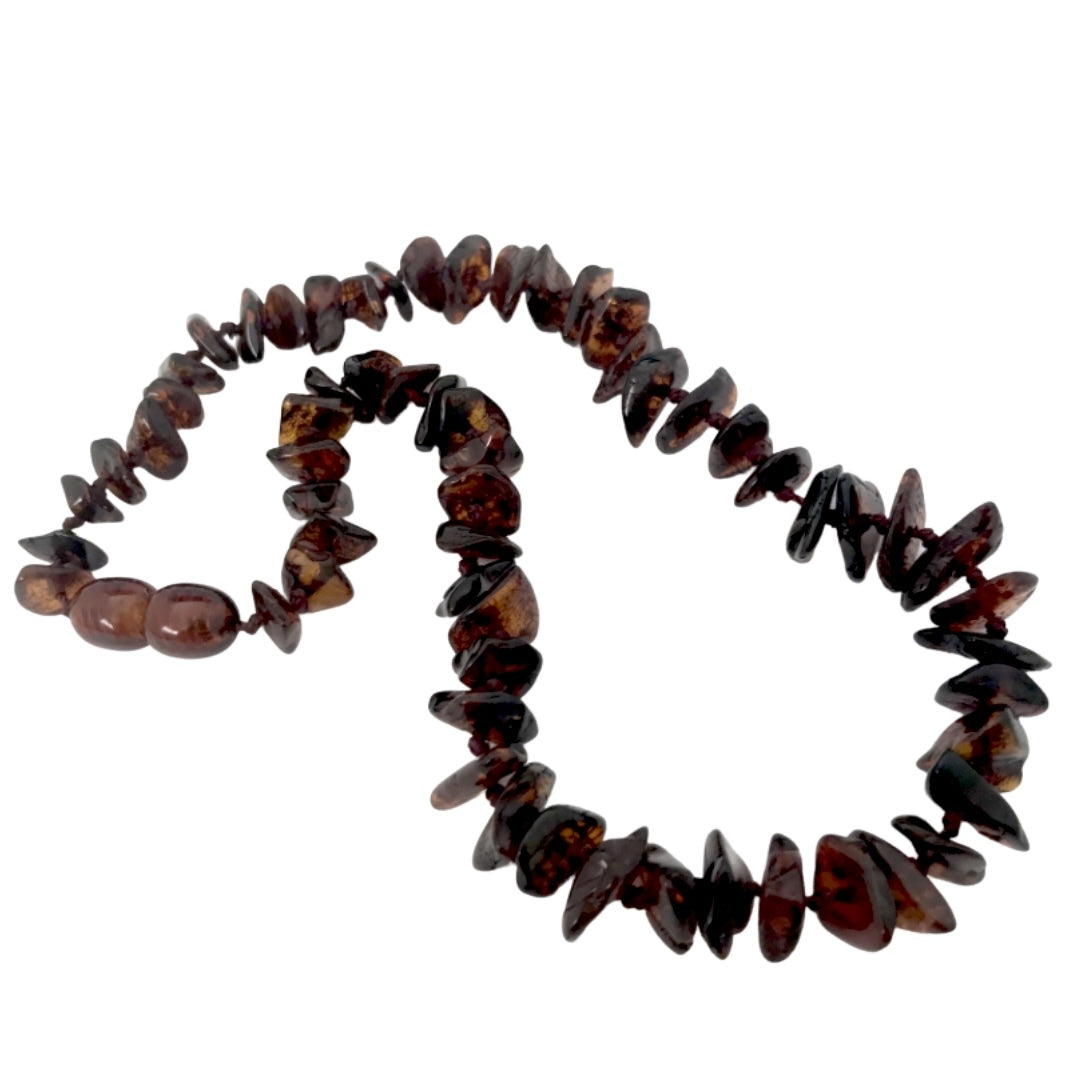
Add a natural and timeless accessory to your little one's collection with the Nature Bubz Baltic Amber Chip Necklace – Cherry. Made with genuine Baltic amber beads, this necklace features a warm Cherry colour and a handcrafted design inspired by the natural beauty of fossilised tree resin.
Baltic amber is formed from ancient tree resin that has been preserved for millions of years and is particularly associated with the Baltic region of Eastern Europe. These amber beads are handcrafted by local Lithuanian artisans, then individually knotted onto a strong wax cord and finished with a plastic screw clasp.
Baltic amber necklaces are traditionally marketed as teething accessories, with anecdotal claims that warmth from the skin may encourage the release of succinic acid and help with teething discomfort, colic, skin conditions, or inflammation. However, these benefits have not been scientifically established, so the necklace should not be relied upon as a treatment for these conditions.
The Small necklace measures approximately 28–30cm in total length, making it a petite accessory designed for babies and young children.
Features
- Genuine Baltic amber chip beads
- Beautiful Cherry colour
- Amber originates from fossilised tree resin
- Handcrafted by Lithuanian artisans
- Beads individually knotted onto strong wax cord
- Plastic screw clasp
- Small size: approximately 28–30cm total length
- Natural and distinctive amber appearance
- Traditionally marketed as a teething accessory
Important Safety Information
This product is not a toy. Never leave a baby or young child wearing an amber necklace unattended. Amber necklaces can present a strangulation and choking risk, particularly if the necklace breaks or individual beads become detached. Remove the necklace during sleep and whenever your child is unattended.
Claims that Baltic amber relieves teething pain, colic, skin conditions, or inflammation are anecdotal and not scientifically proven.